Monday, January 23, 2012

Where do I belong, really?

Am back in this space after a long time, and it is no coincidence that the reason had to be music. And that too, music at its purest, primeval, uncluttered best. I was in Shantiniketan for three days and one evening, on the outskirts of a Santal village, I met this Baul singer singing all by himself in the middle of nowhere, totally unmindful of what was happening around him. I haven't managed to follow all the lyrics but basically the poet is telling someone (presumably a girl) to go back 'to where she really belongs.' Amazingly, the Baul manages three instruments - the 'Ektara' , a drum to hold the rhythm, and ghunghroo tieid to his legs to fill up the spaces between two 'matras' in the rhythm 1


I believe the Baul is singing to all of us, not just to some girl. Often I find myself having arrived (with great effort, mind you) in a certain place and then realize suddenly that I am in the wrong place. What's the option then, but to go back to where one belongs? 

Sunday, February 13, 2011

Once upon a time....


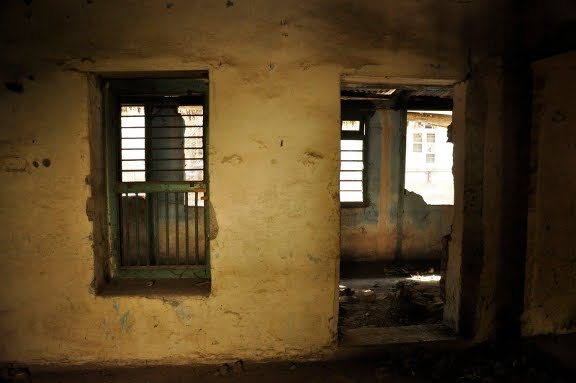
This is the home of my grandparents. It would be more appropriate to say that this WAS their house. Neither of them are alive today, nor does the house now belong to any of their descendants. The house was sold off almost 20 years ago. Usually old buildings in Pune (or for that matter anywhere) have a standard fate, that of being razed to the ground and a new apartment complex coming up at that place. But this one has had to face a different twist of fate. For reasons outside the purpose of this note, the house (& adjoining Bhanuvilas movie theatre) have remained in a state of limbo for nearly twenty years.
This is the home where my grandparents lived, brought up their 11 children, witnessed the ups and downs of life together, saw people come and go for over 50 years. I have spent all my summer vacations here. Every wall, corner, window, broken door-frame - everything - is a living memory for me. Countless moments of joy, growing up with cousins, being doted over by aunts and uncles, and the omnipresent feeling of 'being at home' that my grandparents exuded.

I do not intend to go on a nostalgia trip here. That would be a never-ending venture. All I want to say is - I have paid attention to living beings - people, pets, plants. I have a habit of maintaining inanimate possessions very carefully - books, old pens, old pictures, my grandfather's pocket watch, and so on. But I don't think I have paid enough attention to structures which have sheltered me from the forces of the world. I may have taken them for granted, in fact. Seeing pictures of my family home has brought about this stark realisation, do I love my home enough when I am in it?
This wada at 343, Narayan Peth, Pune and the adjoining Bhanuvilas Talkies will also become a part of history sooner or later. They can't remain like this indefinitely. But I shall forever be grateful to this place for showing me what a home is all about. Most of all, this space provides me with the answer to the existential question - where do I belong? Yes, I belong to this soil, this is where I came from, this is who I am.
My grandpa must have sat in this very place when he dreamt of the countless business ventures that he started. And then seen many of them go bust, one after the other. Through all this, my grandma would have kept the home fires burning, often by selling one by one her family heirloom jewels, must have sat here and written those letters to him. The letter would reach him when he was in jail, where he spent half his working career, just because he decided to follow a path that Gandhi showed. Yes, this is where I have come from.
Every time a space beckons to us, tugs at our heart and asks us to stay back, we resort to saying the good old इदं न मम. (This is not mine.) But a day comes when you take a pause in the race, and say to yourself, "Yes, this IS mine."
Kabir must have realized that "this is not mine" when he said उड जाएगा हंस अकेला . Yes, a day will come when I too, will fly off. Like my grandpa, my grandma, my father, and now my mother has. This bird will fly away too, not knowing where its destination is, but surely knowing where its roots lie. And therein lies a surety that we often seek.
(Note - All photographs by Aniruddha Bhate. I am sure he doesn't mind me posting them here. His roots lie here too, after all.)

Tuesday, January 25, 2011

Tribute to Pandit Bhimsen Joshi

As a child, I still recall the first time I heard the Shuddha Kalyan by Panditji - बतिया तोरा, on a 78 RPM record. 40 years have passed but its magic has not worn off even a wee bit. Later in college days, his three evergreen compositions - सोहे लरा री in Kedar, धन धन मंगल गावो in Kalashree and तू रस का in Durga triggered off an everlasting addiction of classical music.
Then one late night on top of Fort Rajmachi, one of us was fiddling with the transistor, which caught on unknown station and started playing 'सखी मंद झाल्या तारका'. For a moment we relaxed back into our sleeping bags and then suddenly sat up dazed. The voice was Bhimsenji's, not Sudhir Phadke! We could not quite believe our ears that the same powerful voice which had sung रम्य ही स्वर्गाहुनी लंका could bring out such soulful rendering of 'ते प्रेमगाणे छेडणारा सूर तू होशील का'. (If you still haven't heard this, you can do so now on esnips).
And the several early mornings of the concluding recital in Sawai - Ramkali, Jogiya or an Ahir Bhairav, and his ending it with a Bhairavi. How can anyone ever forget his बाबुल मोरा नैहर छूटो जाय?
Then, at the end as everyone stood up to pay homage to Sawai Gandharva and his Bhairavi record was being played, one could see Panditji standing with his head bowed down, humility and respect personified.
I will forever remain indebted to him for showing this huge treasure to me. I am sure there are millions of others with whom I share these sentiments today.
What can one say about the greatness of a person who has enthralled millions of fans for over seven decades with his singing?
All I can do is post a clip from an recording, from way back in 1954. (God bless the soul who thought of recording it then.) Its an captivating rendering of Yaman lasting for nearly an hour (कैसन की - विलंबित एकताल, शाम बजाये आज मुरलिया - द्रुत तीनताल and then a तराणा in द्रुत एकताल.)
I am no expert on Pt. Bhimsen Joshi (I still cannot bring myself to writing 'Late' before his name) but I think he rarely sang a tarana. Am posting only the last bit of the recording here. The photographs are from Google, thanks to all the photographers. I think they won't mind me using these pictures here.
It is only appropriate that I should pay homage to him by posting a tarana in Yaman, a raag that is often sung in the beginning of a concert. Kumarji once said that when words fall short of expressing emotions, a Tarana takes over.
With this, I can start a new phase of devoted listening to his voice.


Friday, December 24, 2010

Whither non-violence? Or Wither non-violence?


While in Bhubaneshwar, I was curious to go and see the 'Shanti Stupa', a memorial to commemorate Emperor Ashok's 'change of heart' after witnessing the carnage of the Kalinga Battle. The visit was eminently disappointing, to say the least.
The Kalinga battle has been taught to every Indian child in history classes and portrayed as an event that shaped Indian culture and its ethos of non-violence. Ashok himself has been immortalized by his 'Chakra' on our flag and his Lion capital being our national emblem. Given the importance of this event and Ashok's contribution to India, I expected a lot from this monument. The reality turned out to be quite different.

A stark white stupa stands atop a small hillock at Dhauli, about 20 km. from Bhubaneshwar. It has four statues of Buddha, each in a different pose on the sides. Eight lions stand watching outward, towards the vast plains that witnessed 
the grim battle of Kalinga.
   
That's it. There is not a single plaque, not a word written anywhere in the premises stating the importance of this place. I later found out that the stupa was actually built by the Japanese Kalinga Nipppon Buddha Sangh as recently as 1971.
Steps leading up to the stupa are flanked by the usual shops selling odd assortment of objects, the kind of shops that one sees outside any Indian temple. The place appears to be a popular picnic spot for people. While returning I couldn't hold on to my disappointment and feigning enough ignorance, I asked the taxi driver whether this place had any significance or whether the stupa was built here 'just like that'. He said he didn't know. Then as an afterthought, he said "you know Ashok, the King? It has some connection with him". Some saving grace, at least.